Tokugawa Shogunate
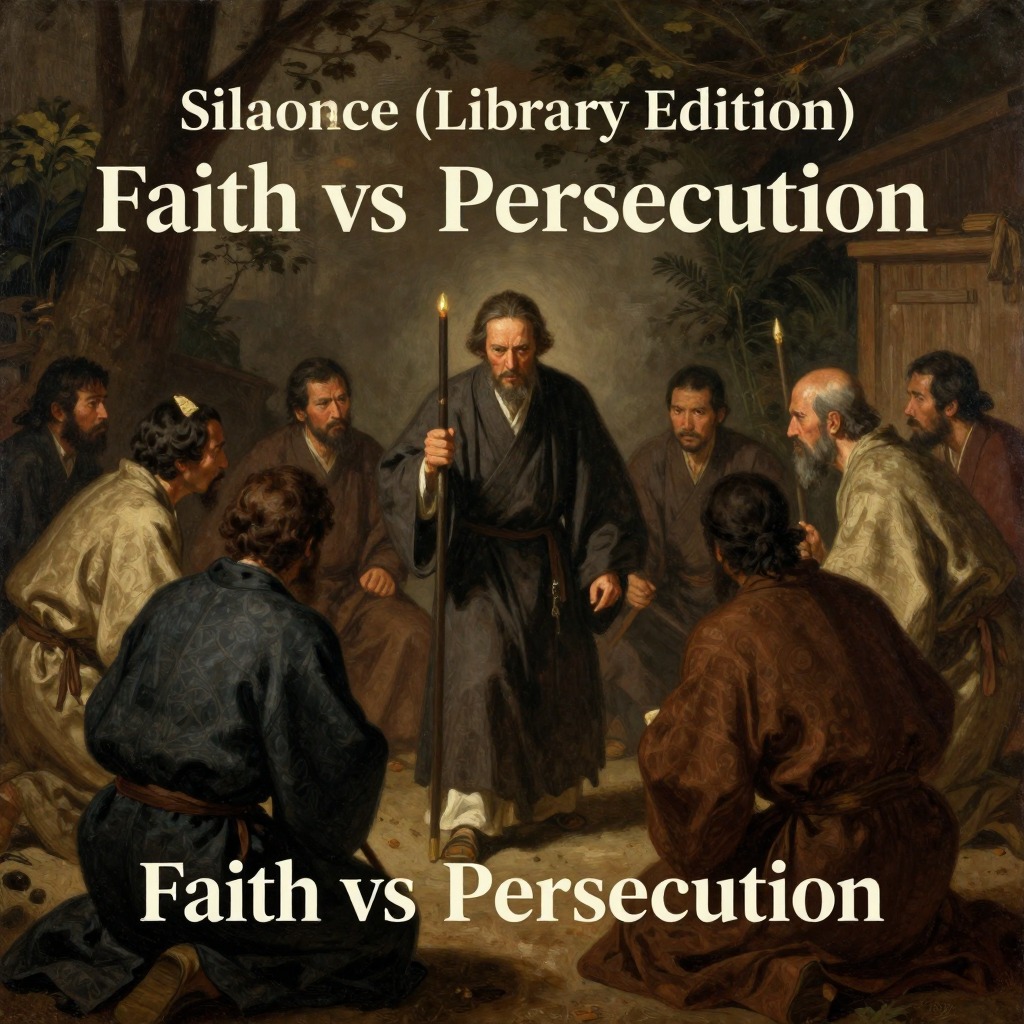
The Tokugawa Shogunate, also known as the Tokugawa Bakufu, was the feudal military government that unified Japan after the Sengoku Period and, under its third shogun Iemitsu, orchestrated the systematic and brutal persecution of Christianity that forms the central historical backdrop of Silence. The Shogunate's policy evolved from cautious tolerance to total eradication, employing a sophisticated apparatus of surveillance, torture, and ideological control that ultimately succeeded in driving the religion underground and reshaping it into something the novel's characters call a 'skeleton' caught in a 'swamp.'
Origins and Shift from Tolerance to Persecution
The Shogunate's relationship with Christianity was initially pragmatic. The architects of Japanese unity—Nobunaga, Hideyoshi, and Ieyasu—were on intimate terms with Portuguese Jesuits, motivated partly by a desire for trade with the black ships from Macao and partly by a deep dislike of Buddhism. From 1570 until 1614, missionaries held a privileged position at the court of the Bakufu, and their letters and reports became a chief source of information for that period. However, the Shogunate's apprehension grew as it observed the unquestioning obedience of its Christian subjects to their foreign guides. The final break came in 1614, when the Edict of Expulsion was promulgated, declaring that the Kirishitan band had come to Japan 'longing to disseminate an evil law, to overthrow true doctrine, so that they may change the government of the country, and obtain possession of the land. This is the germ of a great disaster, and must be crushed.' This edict was the death blow to the open practice of Christianity.
Methods of Control and Extermination
The Shogunate's persecution was not merely violent but systematic and psychological. Under Iemitsu, the hunt for Christians and priests became ruthlessly systematic. The most common early form of execution was burning, but the Bakufu soon realized that 'glorious martyrdoms' were not serving the desired purpose. Torture was introduced before death, most notably the 'ana-tsurushi' or hanging in the pit, which became the most effective means of inducing apostasy. The victim was bound, hung upside down into a pit of filth, and a small incision was made behind the ear to let blood drip slowly. Some survived for days in this position. The Shogunate also created a pervasive surveillance state. A decree forbade anyone from making a fence or hedge between houses, forcing neighbors to see into each other's homes and report suspicious behavior. A reward system was established: three hundred pieces of silver for informing on a priest, two hundred for a brother, and one hundred for a lay Christian. This system turned destitute peasants into potential informers and destroyed trust between communities.
The Shimabara Rebellion and the Final Seclusion
The Shimabara Rebellion, caused by merciless taxation and oppression, became a manifestation of Christian faith, with insurgents carrying banners inscribed 'Praised be the Most Holy Sacrament.' The uprising was put down with ruthless cruelty, and the Tokugawa Bakufu, convinced that such a rebellion could only have been possible with outside help, decided to cut all ties with Portugal and seal off the country from the world. This policy of national seclusion (Sakoku) was the culmination of the Shogunate's campaign to eliminate foreign influence. The Shogunate's power was absolute over its subjects. The feudal lord had unlimited power over his people, much more than any king in a Christian country. The yearly tax was bitterly high, and those who failed to pay were punished mercilessly. The peasants were the slaves of the samurai, and the landowner could kill at will anyone he did not like and confiscate all his property.
The 'Swamp' of Japan: Ideological Transformation
The novel's central metaphor for the Shogunate's success is the 'swamp of Japan.' The Shogunate's power was not just in killing or torturing Christians but in creating a cultural environment that absorbed and transformed the foreign religion. Inoue, the Lord of Chikugo and the architect of the persecution, tells the apostate priest Sebastian Rodrigues, 'Father, you were not defeated by me. You were defeated by this swamp of Japan.' The Shogunate's system ensured that even when Christianity survived, it was twisted and changed. The Japanese, who had no concept of a transcendent God divorced from man, gradually transformed the Christian God into something different. As the apostate Ferreira explains, the Japanese 'twisted God to their own way of thinking in a way we can never imagine,' creating a faith that was like a butterfly caught in a spider's web—only the external form remained, a skeleton. The Shogunate's ultimate victory was not the physical extermination of all Christians but the creation of a system where the faith could not take root in its original form.
Legacy and the Crypto-Christians
Despite the Shogunate's ruthless vigilance, Christianity's roots had gone too deep to be eradicated. Thousands of crypto-Christians kept their faith through a secret organization, handing down baptism and catechism. They gave their names to Buddhist temples and complied with the order to trample on the sacred image (the fumie). The fumie themselves, rubbed flat and shining by hundreds of feet, became a physical testament to the pain of apostasy. When Japan was reopened in 1865, these crypto-Christians emerged from hiding, asking for statues of Santa Maria and speaking about Christmas and Lent. They are still there in their thousands, in Nagasaki and the offshore islands, clinging to a faith that centuries of ruthless vigilance could not stamp out. The Shogunate's policy, while brutally effective in its time, ultimately failed to completely eradicate the faith, leaving a legacy of a hidden, transformed Christianity that survived in the very swamp that was meant to destroy it.